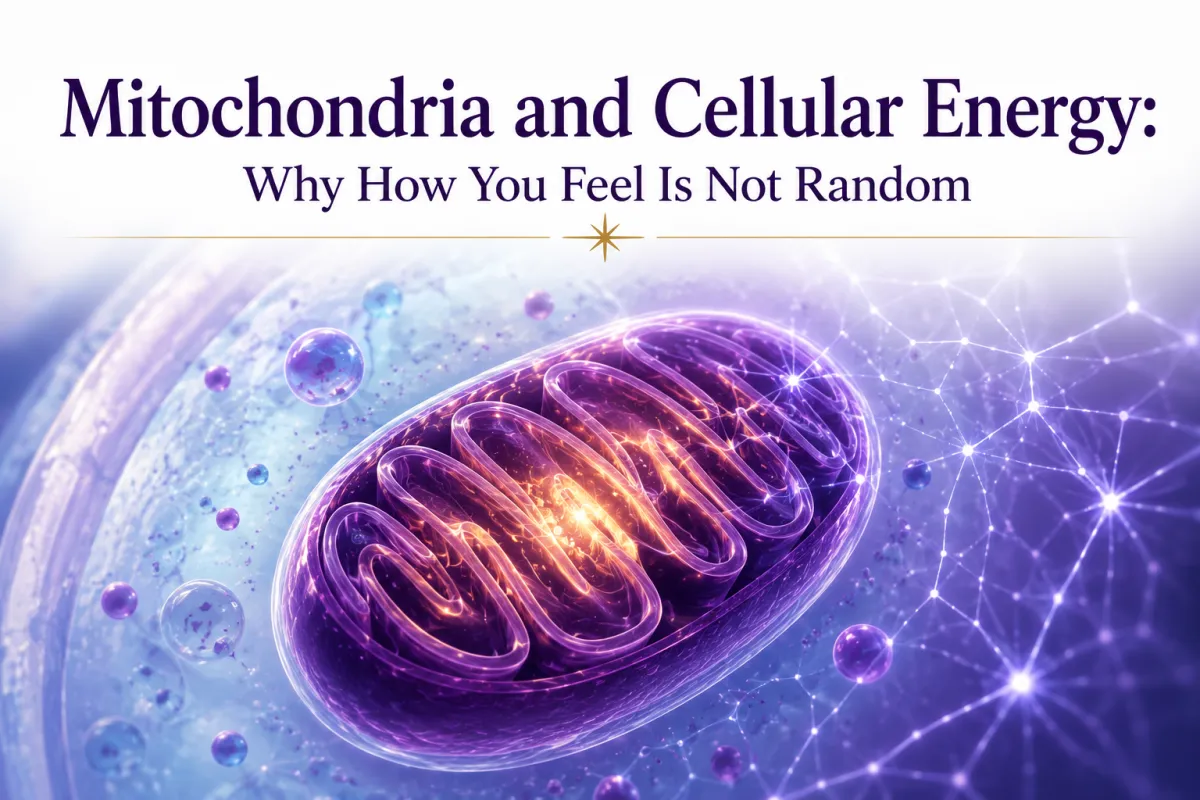
Mitochondria and Cellular Energy: Why How You Feel Is Not Random
You wake up tired. You push through the morning on caffeine. By mid-afternoon your thinking slows, your patience thins, and even small decisions feel heavier than they should. You go to bed exhausted — and wake up the next day ready to repeat the cycle.
Most people accept this as normal. As the price of a busy life, or the inevitable effects of getting older, or just the way their body works.
But this pattern is not random. And it is not inevitable.
In most cases, what looks like chronic fatigue, brain fog, mood instability, or poor recovery is a downstream signal of something happening much further upstream — at the level of the cell.
Understanding what that is — and why it matters — is the starting point for almost everything I do with clients.
What Mitochondria Actually Are
You have probably heard that mitochondria are the "energy factories" of the cell. That description is technically accurate, but it is so incomplete it is almost misleading.
Mitochondria are the organelles responsible for producing adenosine triphosphate, or ATP — the molecule the body uses as its primary energy currency. Every time you think, move, digest food, regulate your temperature, repair tissue, or mount an immune response, ATP is being consumed. The body produces and uses roughly its own body weight in ATP every single day.
But mitochondria are far more than power generators. They are:
Environmental sensors. Mitochondria are exquisitely sensitive to signals from the surrounding cellular environment — food availability, light exposure, oxygen levels, toxin burden, temperature, stress hormones, and more. They are constantly reading the environment and adjusting their behavior accordingly.
Regulators of inflammation. Mitochondria play a central role in the activation of the NLRP3 inflammasome and the production of reactive oxygen species (ROS) — key drivers of cellular inflammation. When mitochondria are dysfunctional, inflammation tends to rise systemically.
Orchestrators of cellular life and death. Mitochondria govern apoptosis — the process by which damaged or dysfunctional cells are eliminated. This is essential for tissue health, immune function, and cancer prevention.
Governors of aging. Mitochondrial dysfunction is one of the most consistent features of the aging process. The accumulation of damaged mitochondria, reduced mitochondrial biogenesis, and declining ATP production capacity are all hallmarks of biological aging.
Participants in hormone synthesis. The production of steroid hormones — including cortisol, estrogen, progesterone, and testosterone — begins in the mitochondria. Mitochondrial health directly influences hormonal health.
When mitochondria are functioning well, the entire system tends to function well. When they are struggling, the effects ripple outward in ways that can look like completely unrelated problems.
How Mitochondria Produce Energy
To understand what goes wrong with mitochondrial function, it helps to understand — at a basic level — how mitochondria produce energy when things are working correctly.
The primary pathway is called oxidative phosphorylation, and it takes place along the inner mitochondrial membrane. In this process, electrons from food-derived molecules (primarily glucose and fatty acids) are passed along a series of protein complexes called the electron transport chain. As electrons move through this chain, they drive the production of ATP.
At the end of the chain, oxygen accepts the final electrons — which is why oxygen is so essential to life. This process also inevitably produces some reactive oxygen species (free radicals) as byproducts, which the body manages through its antioxidant systems.
This process requires a remarkable range of raw materials to run efficiently:
B vitamins (B1, B2, B3, B5) — essential cofactors in almost every step of ATP production
Magnesium — required for ATP synthesis and hundreds of enzymatic reactions
Coenzyme Q10 — a critical electron carrier in the transport chain
Iron and sulfur — components of essential electron transport proteins
Alpha lipoic acid — involved in pyruvate metabolism
L-carnitine — transports fatty acids into the mitochondria for fuel
Antioxidants — manage the ROS produced as byproducts
When any of these raw materials are in short supply — which is common in people eating processed diets, under chronic stress, or dealing with gut absorption issues — ATP production slows. The electron transport chain becomes less efficient. Reactive oxygen species accumulate faster than the antioxidant systems can manage them. And mitochondrial function begins to decline.

Why Mitochondrial Dysfunction Creates Such Diverse Symptoms
One of the most disorienting things about mitochondrial dysfunction is how many different symptoms it can produce simultaneously — and how unrelated those symptoms seem on the surface.
A person with significant mitochondrial dysfunction might experience:
Persistent fatigue that is not relieved by sleep
Brain fog and difficulty with working memory
Anxiety or emotional dysregulation
Hormonal imbalances
Poor exercise tolerance and slow recovery
Frequent illness or slow healing
Digestive issues
Heightened sensitivity to stress, chemicals, or environmental inputs
From a conventional medical perspective, each of these might be evaluated as a separate problem — often leading to multiple diagnoses, multiple medications, and no resolution of the underlying pattern.
But from a cellular perspective, they all make sense as expressions of the same root issue: insufficient cellular energy production to maintain optimal function across multiple systems simultaneously.
The body, when resources are limited, prioritizes survival over optimization. Energy is redirected toward the most urgent biological needs — immune defense, thermal regulation, basic neurological function — and away from higher-order functions like cognitive performance, emotional resilience, and reproductive health.
This is not pathology. It is adaptive intelligence. But it is also the body signaling, clearly, that something in the cellular environment needs to change.
What Damages Mitochondria
Understanding what harms mitochondrial function is just as important as understanding how to support it. In clinical practice, I consistently see the same categories of stressors driving mitochondrial dysfunction:
Chronic Inflammation
Inflammation is energetically expensive. When the immune system is persistently activated — whether from gut dysbiosis, chronic infections, autoimmune activity, food sensitivities, or environmental toxins — the body diverts enormous mitochondrial resources toward immune function and tissue repair. This leaves less cellular energy available for everything else, and the chronic production of inflammatory cytokines directly damages mitochondrial membranes and impairs ATP synthesis.
Nutrient Depletion
Mitochondria are precision machinery. They require a continuous supply of specific micronutrients to function efficiently, and modern life depletes those nutrients through multiple channels: highly processed diets that are calorie-dense but micronutrient-poor, soil depletion that reduces the nutrient content of even whole foods, chronic stress that accelerates the consumption of B vitamins and magnesium, medications (especially statins, metformin, and PPIs) that deplete CoQ10, B12, and other mitochondrial cofactors, and gut dysfunction that impairs the absorption of nutrients even when they are consumed.
Disrupted Light Exposure
This is one of the most underappreciated drivers of mitochondrial dysfunction. Mitochondria respond directly to light — particularly red and near-infrared wavelengths — through a mechanism involving cytochrome c oxidase, a protein in Complex IV of the electron transport chain. Morning sunlight, which is rich in red and near-infrared wavelengths, directly stimulates mitochondrial energy production and helps synchronize the circadian rhythms that govern cellular repair cycles.
Conversely, excessive artificial blue light exposure in the evening suppresses melatonin — which is not just a sleep hormone but one of the most potent antioxidants and mitochondrial protectors in the body. Disrupted circadian rhythms impair the nighttime mitochondrial repair and quality control processes that are essential for long-term cellular function.
Chronic Nervous System Stress
The stress response is metabolically expensive. Cortisol and adrenaline mobilize energy for action — which is appropriate in short bursts. But when the stress response becomes chronic, the sustained demand on mitochondrial resources depletes the system. Chronic stress also increases intestinal permeability (contributing to endotoxin-driven inflammation), disrupts sleep architecture (reducing nighttime cellular repair), and suppresses the parasympathetic nervous system states in which cellular restoration primarily occurs.
Environmental Toxins
Heavy metals, pesticides, mold toxins, plasticizers, and other environmental compounds interfere with mitochondrial function through multiple mechanisms: disrupting electron transport chain proteins, increasing oxidative stress, impairing mitochondrial membrane integrity, and competing with or displacing the mineral cofactors that mitochondrial enzymes depend on. The cumulative toxin burden is a significant and often overlooked contributor to the cellular energy deficit that drives chronic fatigue and cognitive symptoms.
The Role of Muscle in Mitochondrial Health
When people think about supporting mitochondrial function, they often think first about supplements or dietary changes. What is consistently underappreciated is the role of skeletal muscle.
Muscle tissue contains some of the highest concentrations of mitochondria in the body — and for good reason. Muscular effort is one of the most powerful stimulants of mitochondrial biogenesis: the process by which cells create new mitochondria.
The key signal is a molecule called PGC-1α (peroxisome proliferator-activated receptor gamma coactivator 1-alpha), which is activated by physical exertion and serves as the master regulator of mitochondrial biogenesis. When you challenge your muscles — through resistance training, sustained aerobic effort, or even vigorous walking — PGC-1α is upregulated, new mitochondria are formed, and existing mitochondria are induced to improve their efficiency.
Beyond biogenesis, muscle tissue plays several other roles that are directly relevant to mitochondrial health:
Glucose metabolism. Muscle is the largest insulin-sensitive tissue in the body and a primary site of glucose disposal. Adequate muscle mass reduces the metabolic stress of chronically elevated blood sugar — which generates oxidative stress and directly damages mitochondria.
Myokine production. Active muscle secretes signaling proteins called myokines — including irisin, BDNF, IL-6, and others — that have systemic anti-inflammatory effects, support brain neuroplasticity, improve insulin sensitivity, and support mitochondrial function in tissues beyond muscle itself.
Mitochondrial quality control. Regular physical activity promotes mitophagy — the selective elimination of damaged, dysfunctional mitochondria. This quality control process is essential for maintaining a healthy mitochondrial population and preventing the accumulation of dysfunctional mitochondria that contribute to accelerated aging.
The practical implication is significant: building and maintaining muscle mass is not just about aesthetics or physical performance. It is one of the most powerful lifestyle-based investments you can make in cellular energy production and long-term resilience.
Borrowed Energy vs. Cellular Resilience
There is an important distinction between two kinds of energy that I find helps people understand why they have not yet solved their fatigue despite trying many things.
Borrowed energy is energy derived from external props or compensatory mechanisms: caffeine, stimulants, adrenaline from chronic stress, pushing through on willpower alone. Borrowed energy works — in the short term. But it does not address the underlying cellular deficit, and it often increases the depletion that created the deficit in the first place. Caffeine, for instance, works by blocking adenosine receptors — it does not generate more ATP. The underlying energy debt remains, and interest continues to accumulate.
Cellular resilience is the body's genuine capacity to produce stable, consistent energy; adapt to physical and psychological stress without collapsing; recover fully from exertion and illness; and maintain cognitive and emotional clarity even under demand. This kind of resilience is built at the level of the cell — by reducing the stressors burdening the mitochondria, restoring the nutrient substrates they need, supporting the systems (muscle, gut, sleep, nervous system regulation) that influence their function, and creating the conditions in which mitochondrial repair and biogenesis can occur.
The difference between these two states is not subtle once you have experienced both. People with genuine cellular resilience often describe their energy as steady and available — not dependent on caffeine to start, not depleted by normal demands, not requiring a full weekend to recover from a full week.
This is not an unrealistic standard. It is what the body is capable of when the cellular environment is adequately supported.
How I Assess Cellular Resilience
Functional assessment of mitochondrial and cellular health goes beyond standard blood panels. The markers I find most informative include:
Organic acids testing — measures metabolic byproducts in urine that reflect the efficiency of mitochondrial energy pathways, nutrient cofactor status, oxidative stress burden, and neurotransmitter metabolism.
Comprehensive micronutrient testing — assesses intracellular levels of the vitamins, minerals, and antioxidants that mitochondria depend on, going beyond serum levels which often appear normal even when functional deficiency exists.
Inflammatory markers — including hs-CRP, ferritin, and cytokine panels that reflect the chronic inflammation burden consuming mitochondrial resources.
Toxin and heavy metal assessment — identifies the environmental compounds competing with mitochondrial function.
Cortisol and adrenal patterns — chronic HPA axis dysregulation is both a driver and a consequence of mitochondrial dysfunction, and understanding the current adrenal pattern shapes the restoration approach.
The Cellular Resilience Test inside the NeuroLongevity Kickstart is designed to provide a comprehensive picture of what is actually interfering with cellular energy production in a given individual — so that the path forward is targeted and informed rather than generic.
Where to Start
If you recognize yourself in what has been described here — if your energy has felt unreliable, your recovery slow, your cognitive performance below what you know it should be — the most important first step is understanding what is actually driving the pattern.
Mitochondrial dysfunction does not look the same in every person. For some it is primarily nutrient depletion. For others it is chronic inflammation from gut dysfunction. For others it is a combination of toxin burden, disrupted circadian rhythms, and nervous system dysregulation. Identifying which drivers are most significant in your specific situation is what allows the restoration process to be effective rather than scattershot.
The body is not betraying you. It is doing exactly what it is designed to do — protecting you within the constraints of the environment it has been given.
When the environment changes — when the raw materials are restored, the stressors are reduced, the systems that support cellular repair are allowed to function — the body's capacity to heal and produce stable, genuine energy is often far greater than people expect.
Lisa Ann works at the intersection of functional neurology, cellular health, and nervous system regulation. The NeuroLongevity Quickstart includes a Cellular Resilience Test designed to identify the specific patterns interfering with cellular energy production. [Learn more]


