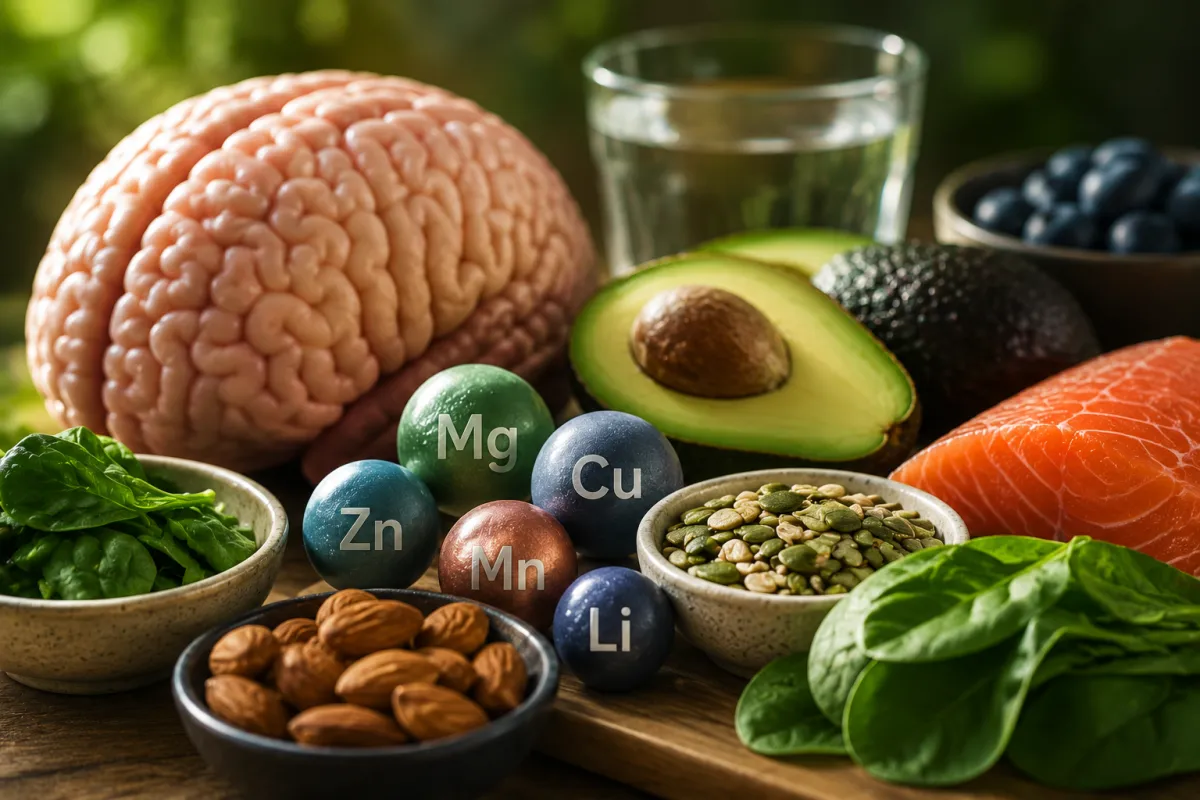
Trace Minerals and the nervous system
Trace Minerals and the Nervous System: Why Depletion Is the Hidden Driver of Anxiety, Fatigue, and Poor Recovery
By Lisa Ann de Garcia
There is a category of health problem that is extraordinarily common, genuinely debilitating, and almost entirely invisible to standard medical testing.
It does not show up reliably on basic blood panels. It does not have a dramatic presentation that prompts investigation. It develops slowly, over months and years, in people who are often doing many things right — eating reasonably well, managing their stress as best they can, taking supplements they have researched carefully.
And yet they cannot calm down. They cannot sleep deeply. They recover slowly from normal exertion. Their energy is unpredictable. Their anxiety feels physical rather than psychological — a buzzing, a tightness, a low-level hum of activation that never fully resolves.
What they are often dealing with, at least in part, is trace mineral depletion.
Not a dramatic deficiency of the kind that shows up as a clinical disease. A functional depletion — the kind where the body has enough of a mineral to prevent the acute symptoms of deficiency, but not enough to run the nervous system's regulatory machinery with the efficiency and resilience it was designed to have.
This distinction matters enormously. And it is one that conventional medicine, focused primarily on disease-level deficiency, is poorly equipped to identify or address.
Why Minerals Are Not Optional
Trace minerals occupy a category in nutrition that is difficult to convey without some basic biochemistry. They are not fuel sources — they do not provide calories. They are not structural materials in the obvious sense that protein is. They are not signaling molecules in the way that hormones are.
What they are is cofactors — the essential participants in enzymatic reactions without which those reactions either cannot occur at all or occur at dramatically reduced efficiency.
The human body runs on enzymes. Every biochemical process — every step of energy production, every neurotransmitter synthesis reaction, every DNA repair mechanism, every detoxification pathway, every immune response — is catalyzed by an enzyme. And a remarkable proportion of those enzymes require specific minerals to function.
Magnesium alone is a required cofactor for more than 300 enzymatic reactions. Zinc is required for the activity of over 300 enzymes. Copper is involved in at least 50 known enzymatic processes. Manganese is the cofactor for the mitochondrial superoxide dismutase enzyme — the primary antioxidant defense inside the mitochondria themselves.
When these minerals are present in adequate amounts, enzymatic reactions run at full efficiency. When they are depleted, reactions slow, become less precise, or fail to complete. The body compensates — prioritizing the most essential processes, downregulating others — but compensation has limits. And those limits are where symptoms emerge.
For the nervous system specifically, the consequences of mineral depletion are among the most immediately felt in the body. The nervous system is one of the most electrically and metabolically demanding systems in biology. It runs almost entirely on mineral-dependent processes. And it is one of the first places depletion becomes symptomatic.

The Six Minerals That Matter Most for Nervous System Regulation
Magnesium: The Master Regulator
Magnesium is the most consequential single mineral for nervous system regulation — and one of the most commonly depleted in modern populations.
Its roles in neurological function are numerous and interconnected. Magnesium is required for the synthesis of ATP — the energy currency that powers the sodium-potassium pump, which in turn maintains the membrane potential that makes nerve firing possible. Without adequate magnesium, the electrical infrastructure of the nervous system begins to degrade at the most fundamental level.
Magnesium also modulates voltage-gated calcium channels, acting as a natural physiological blocker that sits inside the channel and prevents excessive calcium entry. This is one of its most important nervous system functions — calcium channel dysregulation, as discussed in the membrane health series, is a major driver of nervous system hyperexcitability, chronic muscle tension, and disrupted sleep. Magnesium is what keeps calcium signaling precise rather than excessive.
Beyond calcium channel regulation, magnesium supports GABA synthesis and receptor function. GABA is the nervous system's primary inhibitory neurotransmitter — the main biological mechanism by which the brain quiets excitatory activity and shifts toward rest. Magnesium deficiency impairs GABA activity, which is one of the most direct pathways from mineral depletion to anxiety, insomnia, and the inability to downregulate from a state of activation.
Finally, magnesium is required for the enzymes involved in cortisol metabolism. Every cortisol spike consumes magnesium. Chronic stress is therefore both a cause and a consequence of magnesium depletion — stress depletes magnesium, and depleted magnesium reduces the nervous system's capacity to buffer stress.
The modern food supply provides far less magnesium than it did a century ago. Soil depletion, food processing, and the shift away from mineral-rich foods like organ meats, legumes, and dark leafy greens have all contributed to a situation where a significant proportion of the population is functionally magnesium-insufficient — not clinically deficient by conventional standards, but operating below the threshold required for optimal nervous system regulation.
Zinc: The Architect of Repair and Regulation
Zinc is essential for immune function, wound healing, and hormone production — functions most people are familiar with. Less commonly discussed is its direct role in neurological health.
Zinc is required for the synthesis and regulation of several key neurotransmitters, including GABA, glutamate, and serotonin. It modulates NMDA receptors — the glutamate receptors involved in learning, memory formation, and synaptic plasticity. It supports the integrity of the blood-brain barrier. And it is involved in the production of brain-derived neurotrophic factor (BDNF), a protein essential for neuronal survival, growth, and the maintenance of cognitive function.
Zinc depletion is associated with depression, anxiety, impaired memory, reduced stress resilience, and slowed recovery from neurological and immune challenges. It is also associated with impaired taste and smell, reduced wound healing, and hormonal dysregulation — symptoms that, when present together, paint a recognizable picture that targeted zinc restoration often improves substantially.
The critical caveat with zinc is its relationship with copper.
Copper: The Underappreciated Conductor
Zinc and copper are physiological antagonists that must remain in careful balance. They compete for absorption through shared intestinal transporters, and they oppose each other in several metabolic pathways. The ratio between them matters as much as the absolute level of either.
Copper has several unique and important roles that distinguish it from other trace minerals. It is required for the function of cytochrome c oxidase — the enzyme in Complex IV of the mitochondrial electron transport chain that accepts electrons at the final step of ATP production. Without adequate copper, mitochondrial energy production cannot proceed at full efficiency.
Copper is also required for the synthesis of dopamine and norepinephrine. The enzyme dopamine beta-hydroxylase, which converts dopamine to norepinephrine, is copper-dependent. This gives copper a direct influence over the catecholamine neurotransmitter balance that governs motivation, alertness, stress response, and mood.
Both copper deficiency and copper excess create neurological symptoms — which is what makes this mineral so clinically important and so often missed.
Copper deficiency can produce fatigue, impaired immune function, anemia, and neurological symptoms including poor coordination and cognitive decline. These are the effects of inadequate copper for its enzymatic roles.
Copper excess — which is more common than most practitioners recognize — tends to produce a distinct pattern of anxiety, racing thoughts, insomnia, emotional reactivity, and in more severe cases, psychosis-like symptoms. Elevated copper depletes zinc (through competitive antagonism), impairs dopamine-to-norepinephrine conversion in a dysregulated way, and can produce a state of neurochemical excitation that looks and feels like anxiety disorder but does not respond well to anxiety treatments because the root is biochemical rather than psychological.
Sources of excess copper accumulation include copper water pipes, copper intrauterine devices (IUDs), synthetic estrogen-containing contraceptives and hormone replacement (estrogen promotes copper retention), and diets high in copper-rich foods without adequate zinc to balance.
Understanding whether a person's copper status is low, high, or imbalanced relative to zinc requires specific testing — which is one of the primary reasons I rely on the HTMA rather than standard panels for mineral assessment.
Manganese: The Quiet Antioxidant
Manganese receives far less attention than magnesium, zinc, or copper — and is correspondingly less well understood by most practitioners. But its role in mitochondrial health makes it genuinely important in the context of cellular resilience.
Manganese is the essential cofactor for manganese superoxide dismutase (MnSOD), the primary antioxidant enzyme that operates inside the mitochondria. MnSOD neutralizes superoxide — the reactive oxygen species produced as a byproduct of normal ATP synthesis in the electron transport chain. Without adequate MnSOD activity, superoxide accumulates inside the mitochondria, damaging mitochondrial DNA, membrane proteins, and the electron transport chain complexes themselves.
This makes manganese uniquely important: it is not just a cofactor for general cellular antioxidant defense, but for the specific defense mechanism that protects the mitochondria from the oxidative byproducts of their own energy production.
Manganese also supports blood sugar regulation through its role in gluconeogenesis enzymes, and it is required for the synthesis of proteoglycans — the structural molecules of cartilage and connective tissue. The neurological effects of manganese deficiency tend to be subtle and nonspecific: increased oxidative stress, metabolic instability, and reduced antioxidant buffering capacity.
It is worth noting that manganese toxicity — which produces a Parkinson's-like neurological syndrome — occurs at very high exposure levels, typically in occupational settings involving manganese dust or contaminated water. Normal dietary manganese from whole food sources does not approach these levels.
Lithium: The Neurological Protector
Lithium occupies an unusual position in the world of trace minerals. Most people associate it exclusively with lithium carbonate — the pharmaceutical agent used at gram-level doses to treat bipolar disorder. The trace mineral conversation about lithium is entirely different, and the distinction matters.
At the microgram-to-milligram doses found naturally in soil and drinking water, lithium acts as a genuine neuroprotective micronutrient. Its mechanisms at trace levels include promoting the production of BDNF, supporting the expression of neuroprotective proteins including Bcl-2 (which inhibits neuronal apoptosis), reducing neuroinflammation, supporting neuroplasticity and synaptic maintenance, and modulating the activity of several enzymes involved in inflammation and oxidative stress.
Population studies have consistently found lower rates of mood disorders, suicide, and some neurodegenerative conditions in geographic regions where natural lithium concentrations in drinking water are higher. These are not pharmacological effects — the levels involved are hundreds of times lower than therapeutic pharmaceutical doses. They are the effects of having adequate trace mineral status for the neuroprotective roles lithium plays at physiological concentrations.
Many people are functionally deficient in trace lithium. Agricultural soil depletion has reduced the lithium content of food. Filtered and reverse-osmosis purified water removes whatever trace lithium the water supply contained. And the standard Western diet provides very little from natural food sources.
Lithium orotate — a supplemental form that delivers lithium in organic complex at doses of 1 to 5 milligrams — is the most common approach to restoring trace lithium status. At these doses it has no relationship to the effects or risks of pharmaceutical lithium, and it can be meaningfully supportive for mood stability, anxious rumination, and cognitive resilience in people who are deficient.
Fulvic Acid: The Mineral Transporter
Fulvic acid is not a mineral itself, but it belongs in this conversation because of the role it plays in making minerals bioavailable.
Fulvic acid is a naturally occurring organic compound produced by the microbial decomposition of plant matter in mineral-rich soils. It is a component of humus — the organic fraction of healthy soil — and in natural ecosystems, plants absorb trace minerals from the soil in fulvic acid complexes that significantly enhance their bioavailability.
As a supplement, fulvic acid acts primarily as a chelator and transporter. It binds trace minerals in small organic complexes that intestinal cells recognize and absorb more efficiently than isolated inorganic mineral salts. It can significantly improve the cellular uptake of minerals that might otherwise be poorly absorbed — particularly in individuals with compromised gut integrity, reduced stomach acid, or long-standing depletion.
Fulvic acid also supports cellular detoxification. It binds heavy metals and environmental toxins with reasonable affinity, facilitating their removal from tissue through normal excretory pathways. This is significant because heavy metals are among the most common mineral antagonists — lead displaces calcium, cadmium displaces zinc, mercury disrupts selenium and sulfur-based enzyme systems. Reducing heavy metal burden through fulvic acid is therefore indirectly supportive of trace mineral sufficiency.
The food supply provides essentially no fulvic acid in the quantities that would have been naturally available before industrial agriculture stripped organic matter from agricultural soils. This is one of the many ways modern food production has created mineral sufficiency problems that did not exist for most of human history.
The Stress-Depletion Cycle
Understanding the individual minerals is important. Understanding how they are depleted together — and why chronic stress creates a self-reinforcing pattern of progressive mineral insufficiency — is equally essential for grasping why this issue is so prevalent and so persistent.
When the stress response activates, the adrenal glands produce cortisol and adrenaline. These hormones mobilize energy, redirect blood flow, suppress non-essential functions, and prepare the body for action. This is entirely appropriate as a short-term response.
The problem with chronic stress — the ambient, continuous background stress that characterizes modern life for most people — is that it keeps these systems activated at low levels indefinitely. And that sustained activation has measurable mineral consequences.
Cortisol synthesis and metabolism requires magnesium at multiple enzymatic steps. Every episode of stress activation therefore draws on magnesium reserves. With sufficient dietary magnesium and adequate recovery time, these reserves replenish. With insufficient dietary intake and insufficient recovery — which describes a significant proportion of the population — the net direction is depletion.
Adrenaline (epinephrine) mobilization accelerates the consumption of B vitamins and several trace minerals involved in catecholamine synthesis. Sustained sympathetic nervous system tone increases renal excretion of magnesium, potassium, and zinc — the kidneys literally excrete more of these minerals under stress conditions, regardless of intake level.
Cortisol's effects on the gut are particularly significant. Sustained cortisol elevation increases intestinal permeability, alters the microbiome composition, and can impair the absorption of fat-soluble vitamins and trace minerals even when dietary intake appears adequate. The gut dysfunction that accompanies chronic stress creates a second pathway to mineral depletion independent of increased excretion.
The result of all of this is a system that is progressively less able to regulate itself:
More stress → more cortisol and adrenaline → more mineral consumption and excretion → less magnesium to block calcium channels → more nervous system excitability → more difficulty downregulating → more stress.
This cycle is self-reinforcing and, without deliberate intervention, tends to deepen over time. It is one of the primary explanations for why high-functioning people with demanding lives often find their resilience declining despite their best efforts to manage it — and why the solution is often less about stress management techniques and more about restoring the mineral substrate that makes regulation biologically possible.

Why Standard Blood Tests Miss This
One of the most frustrating aspects of functional mineral depletion is how consistently it fails to appear on standard laboratory testing.
Blood serum is a tightly regulated compartment. The body defends serum mineral levels vigorously, drawing on tissue reserves — bone, muscle, and organ stores — to maintain serum concentrations within normal ranges. This means serum magnesium, for example, can appear completely normal while intracellular magnesium is significantly depleted. By the time serum magnesium falls below the laboratory reference range, depletion is typically quite advanced.
The same dynamic applies to zinc, copper, and most other trace minerals. Serum levels reflect the body's compensatory management of a regulated fluid, not the actual mineral status of the tissues where biological work is happening.
This is the fundamental limitation of serum mineral testing for functional assessment — and it is why I rely primarily on the Hair Tissue Mineral Analysis (HTMA) for understanding mineral patterns in clinical practice.
The HTMA measures mineral content deposited in hair tissue over a two-to-three month period. Because hair is formed from rapidly dividing cells that reflect intracellular mineral status during the period of growth, it provides a window into the mineral dynamics that are actually influencing physiology — including the patterns of accumulation, utilization, and loss that characterize the stress response and its mineral consequences.
What the HTMA reveals that blood panels typically cannot:
Adrenal patterns. The ratio of sodium to magnesium in hair tissue reflects adrenal output and the stage of the stress response. Elevated sodium relative to magnesium suggests a high-cortisol, high-output sympathetic pattern. Depleted sodium relative to magnesium suggests adrenal exhaustion — the later stages of chronic stress where output has declined from years of overactivation. These patterns inform the appropriate restoration approach, which is not the same for both presentations.
Cellular thyroid function. The ratio of calcium to potassium in hair tissue reflects thyroid hormone receptor sensitivity at the cellular level. This can reveal functional hypothyroidism — where thyroid hormone is present but cells are not responding to it adequately — even when TSH and T4 appear normal on standard panels. This finding is clinically significant for a large number of people whose thyroid symptoms remain unexplained by conventional testing.
Copper dysregulation. The HTMA reliably identifies elevated tissue copper relative to zinc — one of the most common patterns I encounter, particularly in women, and one of the most significant drivers of anxiety, mood instability, and cognitive symptoms. This pattern is almost never detected on standard panels because serum copper can appear normal even when tissue copper is significantly elevated and functionally problematic.
Heavy metal burden. The HTMA measures accumulation of lead, mercury, cadmium, arsenic, aluminum, and other environmental metals in tissue — providing a picture of the toxic metal burden that may be displacing essential minerals and contributing to the overall physiological load.
Metabolic rate indicators. The overall mineral pattern — particularly the balance of the four macrominerals (calcium, magnesium, sodium, potassium) — reflects the current metabolic rate and the direction of physiological adaptation, information that shapes the entire approach to mineral restoration.
The HTMA is not a perfect test — like all assessments, it has limitations and requires informed interpretation. But for the specific purpose of understanding functional mineral status and the physiological patterns that accompany it, it provides information that simply is not available from any standard panel.
Restoring Mineral Status: Principles and Priorities
Mineral restoration is not complicated in principle, but it requires more care than most supplement guidance suggests. Several principles guide the approach I take in practice:
Address depletion systematically, not symptom by symptom. The temptation when reading about individual minerals is to begin supplementing each one that resonates with a symptom. This is rarely the right approach. Minerals interact. Taking zinc without considering copper, or magnesium without considering calcium status, can create secondary imbalances that complicate the picture. An assessment first — ideally an HTMA — allows a more targeted and safer approach.
Form determines bioavailability. Magnesium glycinate for nervous system support and sleep. Magnesium threonate for cognitive and neurological applications. Magnesium malate for energy metabolism. Zinc bisglycinate or zinc picolinate for absorption. Copper bisglycinate if copper supplementation is indicated. Lithium orotate at trace doses. These distinctions matter in practice and should inform supplement selection.
Food-first mineral sourcing builds a different foundation than supplements alone. Minerals from food come embedded in organic matrices with cofactors, enzymes, and binding proteins that facilitate their utilization in ways that isolated supplements do not fully replicate. Dark leafy greens, pumpkin seeds, cacao, grass-fed and pasture-raised meats, oysters and shellfish, liver, wild-caught fatty fish, and mineral-rich spring or well water are among the most reliably mineral-dense whole food sources.
Fulvic acid improves the efficiency of everything else. For individuals with compromised gut integrity, reduced stomach acid (common with aging and stress), or long-standing depletion, adding a high-quality fulvic acid mineral complex can meaningfully improve how much of the minerals being consumed actually reaches tissue level.
Restoration takes time, and signs of progress often precede complete replenishment. Tissue-level mineral depletion that has developed over months or years will not reverse in two weeks. But many people notice meaningful improvements in sleep quality, nervous system regulation, stress tolerance, and muscle tension within three to six weeks of a well-targeted mineral protocol — even before the deeper replenishment is complete.
Heavy metal burden may need to be addressed in parallel. Heavy metals that are competing with or displacing essential minerals create a ceiling on how effectively mineral restoration can proceed. Identifying and gently supporting the removal of heavy metals — through fulvic acid, sulfur-bearing compounds like NAC and alpha lipoic acid, and adequate mineral competitors — is often part of a complete restoration approach.
The Bigger Picture
Trace minerals sit at the intersection of energy production, nervous system regulation, hormonal signaling, immune function, and cellular repair. They are the cofactors that allow the body's enzymatic machinery to function with the efficiency and precision it was designed to have.
Their depletion is not dramatic. It is gradual, cumulative, and insidious — developing quietly over the course of years while the body compensates, adapts, and eventually begins to express the limits of that compensation as symptoms.
The symptoms are not random. They are signals — signals that the biological substrate underlying nervous system regulation, cellular energy, and stress resilience has been eroded below the threshold required for optimal function.
The good news is that this is among the most correctable categories of physiological dysfunction I work with. The nervous system, given adequate mineral substrate, often demonstrates a recovery capacity that surprises people who have been struggling for years.
The key is knowing what to look for, how to assess it accurately, and how to restore it in a way that respects the mineral relationships and biological individuality that determine what each person actually needs.
Want to get started on your health journey? Start with my Quickstart program, which will let you take a look under the hood with a simple lab test and a comprehensive health history review. Learn more here.


